Cheap links usually look cheap.
That is the fastest way to understand why manual outreach link building still matters. If your backlink profile is built on recycled lists, private networks, or placements nobody reads, you may get a short-term bump. You also increase the odds of wasted spend, weak indexation, and links that disappear when the vendor moves on. Businesses and agencies that care about stable rankings need a cleaner process.
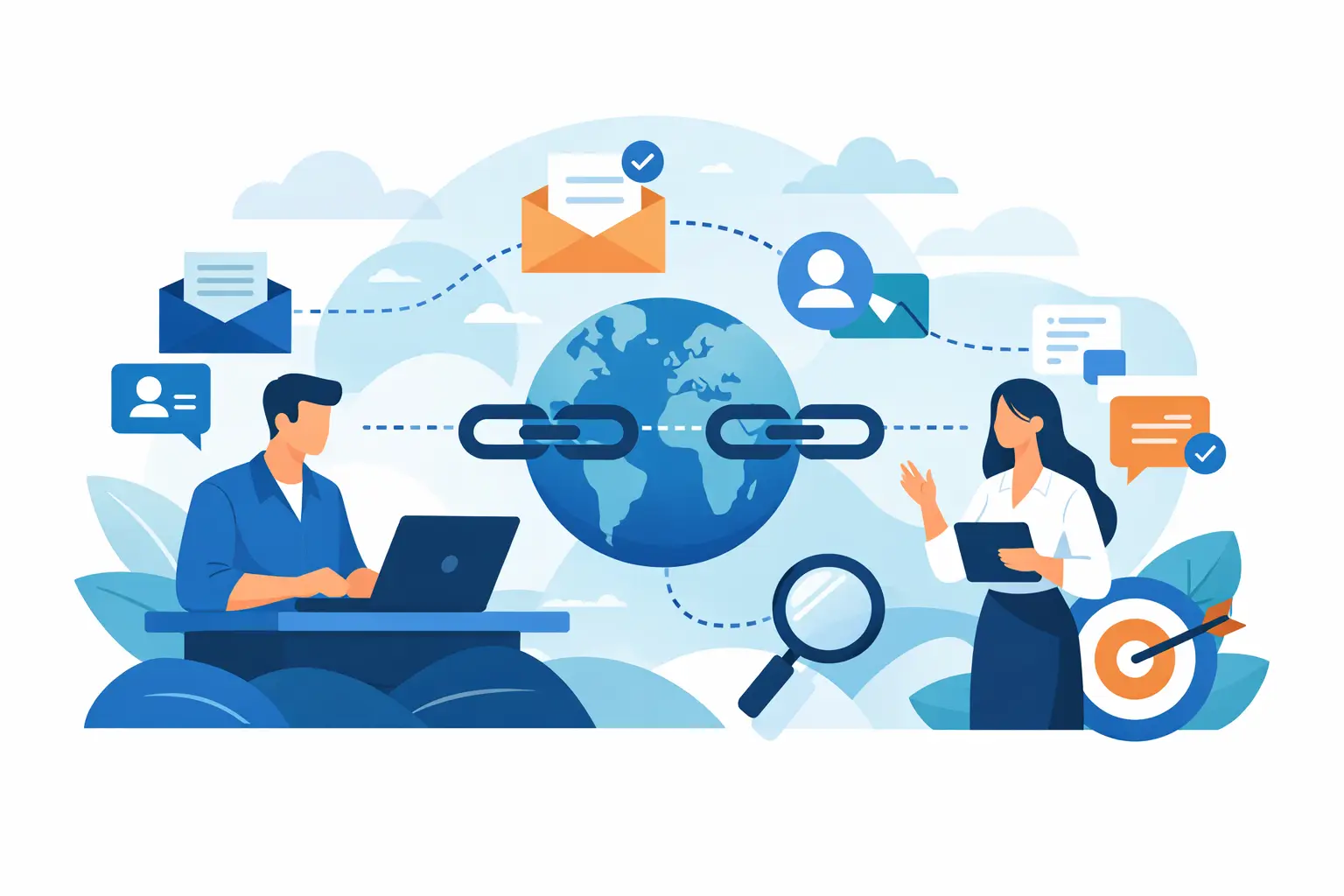
Manual outreach link building is the practice of contacting real website owners or editors one by one to secure placements on actual sites. It is slower than buying bulk links from a spreadsheet seller, but the trade-off is quality control. You can vet the site, control the content standard, set authority thresholds, and place links in articles that make sense for both users and search engines.
Why manual outreach link building still wins
The biggest advantage is legitimacy. When outreach is manual, the placement usually comes from a direct conversation with a site owner, blogger, or editor. That does not automatically make every link valuable, but it gives you a much better chance of landing on websites with real traffic, real publishing history, and real editorial standards.
That matters because not all backlinks pass the same value. A link on an indexed site with established authority, relevant content, and normal outbound linking patterns is simply more useful than a link on a page built only to sell placements. Experienced SEOs already know this. The problem is execution. Prospecting, pitching, negotiating, writing, placing, and reporting take time, and internal teams rarely want to spend hours chasing publishers.
Manual outreach also gives you room to apply standards before money changes hands. You can screen for Domain Authority, traffic, topical fit, language quality, and whether the site looks like a real publication instead of a link farm. That screening does not guarantee rankings, because SEO never works that cleanly, but it reduces obvious risk.
What good manual outreach actually looks like
A lot of vendors say they do outreach manually. Some mean they send bulk emails to a giant database and call it a day. That is not the same thing.
Real manual outreach starts with prospecting. The site list is built around relevance, authority targets, and minimum quality thresholds. Then comes direct contact with the publisher. If the site is open to a contribution or sponsored article, the placement gets negotiated with clear terms. After that, unique content is written for the site, the backlink is placed naturally in the article, and the result is checked for publication and indexation.
The content piece is where many campaigns go wrong. A placement on a decent site can still underperform if the article is thin, off-topic, or obviously written to force an anchor text match. Good outreach links are supported by readable content that fits the site’s audience. That does not mean every post needs to be a magazine feature. It means the article should sound legitimate, match the site’s standards, and give the editor a reason to keep it live.
The trade-offs buyers need to understand
Manual outreach link building is better than low-grade bulk link buying, but it is not magic. It comes with trade-offs.
First, it costs more than automated or pre-stocked links because there is actual labor involved. Somebody has to find sites, contact them, manage responses, write the article, place the link, and verify the result. If a service promises high-authority outreach placements at prices that look unreal, the quality usually breaks somewhere.
Second, turnaround times are less predictable. Real publishers reply on their own schedules. Some placements go live quickly. Others take follow-up. Agencies that need exact deadlines for every order should expect a range, not a hard guarantee on each individual publisher.
Third, relevance is not always perfect at scale. If you need dozens of links in a narrow niche, the pool of quality sites may be smaller than you want. In those cases, the right approach is usually topical adjacency rather than forcing exact-match relevance onto weak sites.
That is why operational clarity matters. Buyers should know what metrics are being used, what content is included, how many links appear per post, whether placements are permanent, and what happens if a live link gets removed later.
How to evaluate a manual outreach link building service
If you are buying outreach instead of running it in-house, focus on process before promises.
Start with the sites. Ask whether placements come from real websites with established authority and indexation. Domain Authority is not the only metric that matters, but it is still useful for package structure and initial filtering. Pair it with traffic checks, publishing consistency, and common-sense review of the site itself.
Then look at content quality. If the service uses generic AI-heavy filler or spun drafts, the placement loses value fast. Unique, readable content written for US audiences is a practical advantage, especially when your clients care about brand fit.
Next, check the fulfillment model. A serious provider should be able to explain what is included: content length, number of backlinks, anchor text handling, reporting, turnaround expectations, and whether placements are in-content rather than stuffed into author bios or irrelevant pages.
Finally, look for buyer protection. Links can drop. Pages can deindex. Publishers can change ownership. A replacement policy matters because outreach is not just about getting a link live for a screenshot. It is about keeping value intact long enough to justify the spend.
Common failures in manual outreach campaigns
The most common failure is treating outreach like a numbers game with no quality filter. More emails do not fix a weak prospect list. If the target sites are poor, the campaign output will be poor too.
Another failure is bad anchor text strategy. Buyers often want aggressive exact-match anchors on every placement. That can make the article read unnaturally and can create a backlink profile that looks forced. A healthier campaign usually blends branded, partial-match, URL, and natural anchors based on the page type and overall profile.
There is also the issue of overpaying for metrics that do not translate into value. A DA number alone does not make a site worth buying. Some inflated websites have authority metrics but weak traffic, low editorial integrity, and obvious outbound link abuse. Manual outreach should reduce that problem, not hide it behind a higher invoice.
When manual outreach link building makes the most sense
It makes sense when you care about quality but still need scale.
For small businesses, it is often the easiest way to compete without hiring an internal outreach team. For agencies, it solves a production bottleneck. Clients want backlinks, but most agencies do not want staff spending their week chasing editors and formatting guest posts. For affiliate marketers and publishers, it provides a cleaner path to growth than gambling on cheap links that vanish or never index.
It is especially useful when you need a repeatable system. Productized outreach packages work well because buyers can choose authority levels, order volume, and content specifications without building a custom campaign from scratch every time. That reduces friction and makes forecasting easier.
A provider like Articlez fits this model because the offer is built around exactly what buyers care about: manual outreach to real sites, American-written content, defined DA tiers, in-content backlinks, indexation guarantees, and replacements for lost placements. That kind of structure is not flashy, but it solves the main buying problem. You know what you are getting, and you do not have to manage the moving parts yourself.
What results should you realistically expect?
Manual outreach can improve rankings, strengthen topical authority, and support pages that are stuck outside the top positions. But the exact outcome depends on the site, the competition, the page being promoted, internal linking, on-page quality, and the existing backlink profile.
In other words, better links help, but they are not a substitute for weak SEO fundamentals. If the target page has thin content, poor intent match, or technical issues, outreach will not fix everything. The strongest campaigns combine quality backlinks with pages that deserve to rank.
That said, manual outreach gives you a cleaner foundation. You are building on placements that are more likely to stay live, get indexed, and sit on websites that look like normal parts of the web. For buyers who want affordable links without stepping into spam territory, that is the point.
If you are spending money on backlinks, spend it where the process is visible, the standards are clear, and the placements come from real websites. Manual outreach link building is not the fastest option on paper, but it is still one of the most dependable ways to buy links without buying problems.